Monday, April 10, 2023

Can cottage industries exist in a machine age?


 J C Kumarappa posed that question his book, Economy of Permanence, which was first published in 1945. He argued that in the final analysis “values and valuation” would determine the direction to be taken. He viewed the choice between cottage industry and large-scale production as an ethical choice as to which type of economy would be preferable. He associated cottage industry with “permanence and non-violence”, and large-scale production with “transience and violence”.


Kumarappa has been described as an ecological economist. He was a follower of Mahatma Gandhi, who wrote a foreword to his book.

Some of Kumarappa’s views seem to have been largely a product of the context in which he lived, but others resonate more broadly. Similar views have been taken up by many affluent consumers in high-income countries. In what follows, I will discuss first why Kumarappa associated large-scale production with violence before considering why he associated it with transience.

Violence

Kumarappa recognizes the potential for specialization and market transactions to be mutually beneficial for the people involved. On that basis, readers might expect him to view wealth accumulation via specialization, trade, and market competition to be a peaceful process.

However, Kumarappa argues that large-scale production prompted industrialized countries to hold other countries in political subjection to obtain materials. He also suggests that large-scale production “is the root cause of wars”. He claims that machines must make full use of productive capacity, rather meet market demand. That results in surplus production. Wars are started to capture markets.

I see several problems with that line of reasoning, but I will only focus on the most obvious one here. Kumarappa seems to assume that manufacturers have control of armies that can be used to ensure access to raw materials and markets. That seems to me to be a strange assumption to make, but I can understand why an Indian economist might see things differently in the light of the history of British colonial rule.

Transience

Kumarappa argues that an economy based on large-scale production is built on the “quicksands” of “profit, price, purchasing power, and foreign trade”. He suggests that material standards of value and personal feelings of consumers cannot have “any degree of permanence” because people change and are perishable. For permanence to be achieved, the standard of value must be objective and controlled by ideals that have enduring qualities. He claims that civilization had endured in China and India because it was based on altruistic and objective values.

The value that Kumarappa places on permanence may require explanation because Hinduism, the dominant religion in India, shares with Buddhism the doctrine that everything is in a constant state of change. Kumarappa was a Christian, but I don’t think that explains as much as his reverence for what he describes as “the secret of nature’s permanency”.  He was referring to ecological factors which “function in close cooperation to maintain the continuity of life”.

Kumarappa was particularly concerned about the impact that the products of large-scale production were having on traditional village life. He argues:

“We are often led away by low money prices ignoring the great gashes in our economic and social organisation made by such short-sighted choice of ours.  … Money value blinds the vision to a long range social view, so that the wielder of the axe fells the branch on which he is standing”.

Kumarappa argues that moral values are attached to every article sold in the market. We should not ignore such values and say “business is business”. Accordingly, anyone who enters into a commercial transaction has a grave responsibility to ensure that she does not become party to circumstances that she would not consciously support. He believed that the consumer is only able to bring her scale of values into play when goods are made locally.

Different views of progress

Kumarappa had a very different view of economic growth than is presented in my book, Freedom, Progress, and Human Flourishing. It may be worthwhile to try to pinpoint the reasons for this.

I don’t think Kumarappa would have any problems with my definition of progress as the growth of opportunities to obtain the basic goods of a flourishing human. He would probably agree, more or less, with my list of the basic goods – wise and well-informed self-direction, health and longevity, positive relationships with others, living in harmony with nature, and psychological well-being.

Kumarappa would probably begin to object at the point where I assert that economic growth counts as progress to the extent that people aspire to have the goods that it offers. He might suggest that people who aspire to have those goods are mistaken because they could flourish to a greater extent by maintaining a simple lifestyle. The more powerful argument he would offer is the one presented above - that the products of new technology are disruptive to existing economic and social organisation.

I would respond by referring to what Deirdre McCloskey has referred to as the bourgeois deal. People in industrialised countries have been willing to accept the possibility that the introduction of new technologies might disrupt their lives because they have good reasons to expect that they, and future generations, are likely to benefit from the expansion of opportunities that it provides.

If that line of argument had been presented to J C Kumarappa in 1945 I imagine he would have viewed it as “pie in the sky”. I am less sure that he would hold the same view today.

Cottage industry

I don’t know much about the economic health of cottage industry in Inda today, but it does continue to exist. The photo shown at the top of this article was taken at Kalra’s Cottage Industry in Agra, when I visited there last year. (By the way, the service offered was excellent. The hand-knotted floor rug I purchased was delivered to my home in Australia without any problems, and in perfect condition.)

My point is that as their material standard of living rises, many people are willing to pay more for high quality products of cottage industries than for mass produced items. Many people also become increasingly concerned about such things as the levels of remuneration of workers who produce the products that they buy and potential environmental damage of production methods. People tend to pay greater attention to such concerns when they feel that they can more readily afford to do so.


Sunday, March 19, 2023

How can you develop the personality traits needed to resist social pressure?


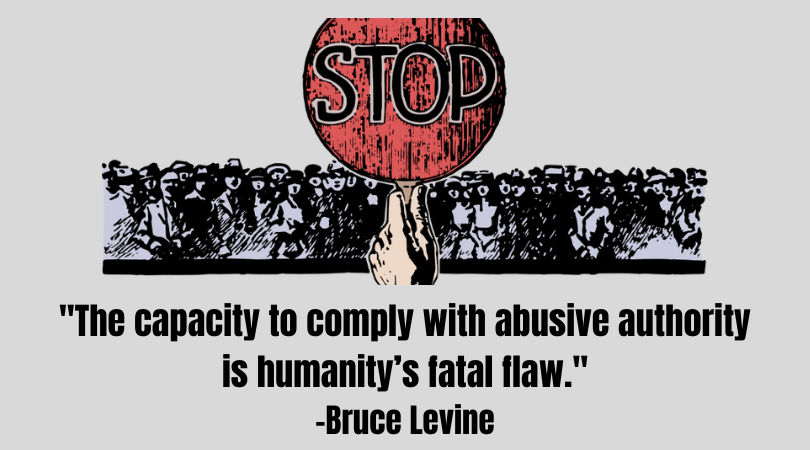
This guest post by my friend, Leah Goldrick was first published on her blog, Common Sense Ethics. Leah has an interest in Stoic philosophy, and is one of the editors of the Stoicism Today, book series. The passage quoted above is by Bruce Levine, author of Resisting Illegitimate Authority.

Leah writes:

In the 1950s psychologist Solomon Asche conducted a famous social science conformity experiment. While there are some variables, Asche concluded that roughly 3 out of every 4 people will conform to social pressure in a given situation.

Many of us are inclined to follow the majority or yield to social pressure because of our evolutionary biology. When our ancestors lived in tribes, we learned various skills by watching others and there were significant risks to our survival for being ostracized from the group. While there are fewer risks to our survival for not conforming with the majority today, there are still risks of being ostracized socially when we disagree. There are also psychological factors at work. People conform because they want to be right, because they want to be liked, or at the very least, because they don't want to seem eccentric or strange.

The ability to resist social pressure is quite important, because it determines what we will do in many contexts and how much backbone we have. While there may be some social drawbacks to resisting peer pressure, there are many benefits as well, such as not always seeking other's approval, thinking more openly, standing up for yourself in situations that matter, living a more authentic life, avoiding potential harm, and perhaps having more opportunities or career success.

Some people naturally have personality traits that make them more resistant to social pressure, but anyone can develop these traits with practice. Here, I'll discuss the stop 5 traits of peer pressure resistant people and how you can develop these traits:

1. Mental Toughness

Mental toughness is essentially is courage, but also grittiness or the ability to stick to your guns. Mental toughness is a prerequisite for every other trait that follows below. In fact, resisting social pressure is pretty much impossible without having or developing some level of courage.

The good news is that courage is easy to develop little by little over time. First, think about what it is you fear if you speak up against some majority opinion. Imagine the worst case scenario and how you would react. Usually the worst doesn't even happen and your fear is basically a non-issue.

Each time you overcome your fear or put yourself out there in some way, you develop more courage.


2. Contrarianism

Socrates, Plato, Diogenes, Epictetus, and many of the other philosophers I write about here on Common Sense Ethics have something in common - they are all contrarians. What is a contrarian? There are many definitions; some positive and some negative. In a nutshell, a contrarian is someone who takes an opposite viewpoint from the majority; the opposite of a conformist.

My own view is that being contrary about everything as a rule will make you quite a difficult person to be around. However, true contrarians are pragmatic, not people who hold their opinions just for the sake of rebellion. They are contrarian about things that really matter to them. Contrarianism can be a helpful trait when the group is wrong, when your values differ from those of the group, when you want to look for opportunities the majority don't see, and/or when going along with social pressure will impact you as an individual negatively in some way.


Contrarians realize they risk social isolation because of their differing viewpoints. They are usually comfortable embracing this risk anyway when the circumstances necessitate it. So, this trait goes right along with trait number 1, courage or mental toughness. Contrarians have courage in certain situations and are comfortable resisting social pressure when it benefits them as individuals. 

To become more contrarian and get better at resisting peer pressure, ask yourself "What can I do differently in this situation which may benefit me?" or "Is this right for me just because it is right for the majority?"


3. Critical Thinking

Socrates said, "To find yourself, think for yourself." Critical thinkers are less likely to go along with social pressure if they have thought deeply about the issue at hand.

Critical thinking is difficult to define, but it is basically the ability to periodically question your own assumptions and to make sure your are thinking clearly and reasonably about something. I've been interviewed about critical thinking and also done a video interview on critical thinking here. Here is a longer definition of critical thinking from that interview:


When I say critical thinking, strictly, I'm referring to logic, or the science of how arguments need to be formed in order to be correct. I'm also referring more generally to skills like being slow to form opinions, having standards of evidence, separating truth from falsehood, being able to accurately evaluate other people's arguments, being open-minded, not being afraid to be wrong, changing your mind in light of better information, and thinking with a degree of detachment (rather than from a dogmatic or emotionally driven mindset). I would also add to this a working knowledge of cognitive bias and group dynamics. All these things are helpful for being able to think more clearly.

It also doesn't hurt to have a good understanding of propaganda and how it is used to influence us, so check out my article on that as well to bolster your critical thinking ability.

4. Disagreeableness

Disagreeable personality types are more resistant to peer pressure because they don't shy away from conflict. They also may be more successful career wise.

Research indicates that people who are higher in disagreeableness may be more successful in their careers, particularly when it comes to moving up the corporate ladder to an upper management position. While this isn't everyone's goal (and in my mind isn't a particular marker of "success," either) being disagreeable can have other advantages too.

People are less likely to pressure a disagreeable person because they know that person probably won't change their mind. Disagreeable people may also give you an earful if you push them too far.

Note that I'm thinking less about being peer pressured to do innocuous things like "You should see x new movie, it's really great." I'm thinking of more troubling forms of social pressure, as it relates to medical decisions for instance: "You should really take this new drug x that everyone must have," (regardless of your unique medical history or other valid reasons you may not want or need new drug x). No matter the situation, a more disagreeable person is less likely to comply.

It's important to note that being somewhat disagreeable doesn't mean you should try to get into conflicts. It does mean that you aren't afraid to assert yourself when someone crosses the line however. Ideally, you should work on your delivery so that you are tactful yet assertive when standing up for yourself or when giving criticism.

If you are a very agreeable person, you can develop a little more backbone by saying no or standing up for yourself in an assertive yet tactful way. In the beginning, this might be uncomfortable, but you will get used to it more over time. It can help to rehearse important conversations ahead of time and think about what you want to say in a given situation.


5. Healthy Skepticism for Authority

Why does skepticism of authority matter for resisting social pressure? Because social pressure is often brought to bear as the result of what some authority says, or on account of the perceived authority of majority opinion.

I want to be clear that I don't think that all authority is inherently negative - authorities can be good, bad, neutral, or anywhere along that continuum. And obviously I'm not talking about situations where questioning authority would put you in harm's way either. If a cop tells you "Put your hands up or I'll shoot," you had better do it.


However their are many circumstances where we should not cede our critical thinking ability to an authority or expert without due consideration. Can we find other experts or authorities who disagree with the first authority? What if an authority or expert is mistaken? What if they have a conflict of interest? What if an expert or authority has proven themselves to be untrustworthy and has a poor track record? All of these things should be in our mind when we consider which authorities we can trust.

Psychologist Bruce Levine writes that the capacity to comply with abusive authority is humanity’s fatal flaw. An abusive authority is one which has shown itself to be dishonest or malevolent in some way. To overcome this flaw and develop a healthy skepticism of authority, we can get into the habit of asking ourselves the questions above.

I hope that this post will help you flex your contrarian muscle more and resist social pressure when it matters. Thanks for reading!